
The Royal Charter of 1841 that established Queen’s University introduced a bicameral system to govern the institution. This model of collegial governance grants the University Senate ‘academical superintendence’ and the Board of Trustees financial decision-making power. While this division of duties has always been fraught, the border between what constitutes financial issues and what is academic has been repeatedly contested over the last few years as the university administration undertakes rounds of budget cuts in response to a declared financial crisis. Concerned faculty, staff, and students have repeatedly brought motions relating to academic matters to Senate and Faculty Board, only to have them declared out of order; the Secretariat continually grants the Board of Trustees paramountcy over the Senate in all matters of disputed jurisdiction.
In light of these contestations, below we have created a reference guide to who decides what, when, where, and how at Queen’s
Senate
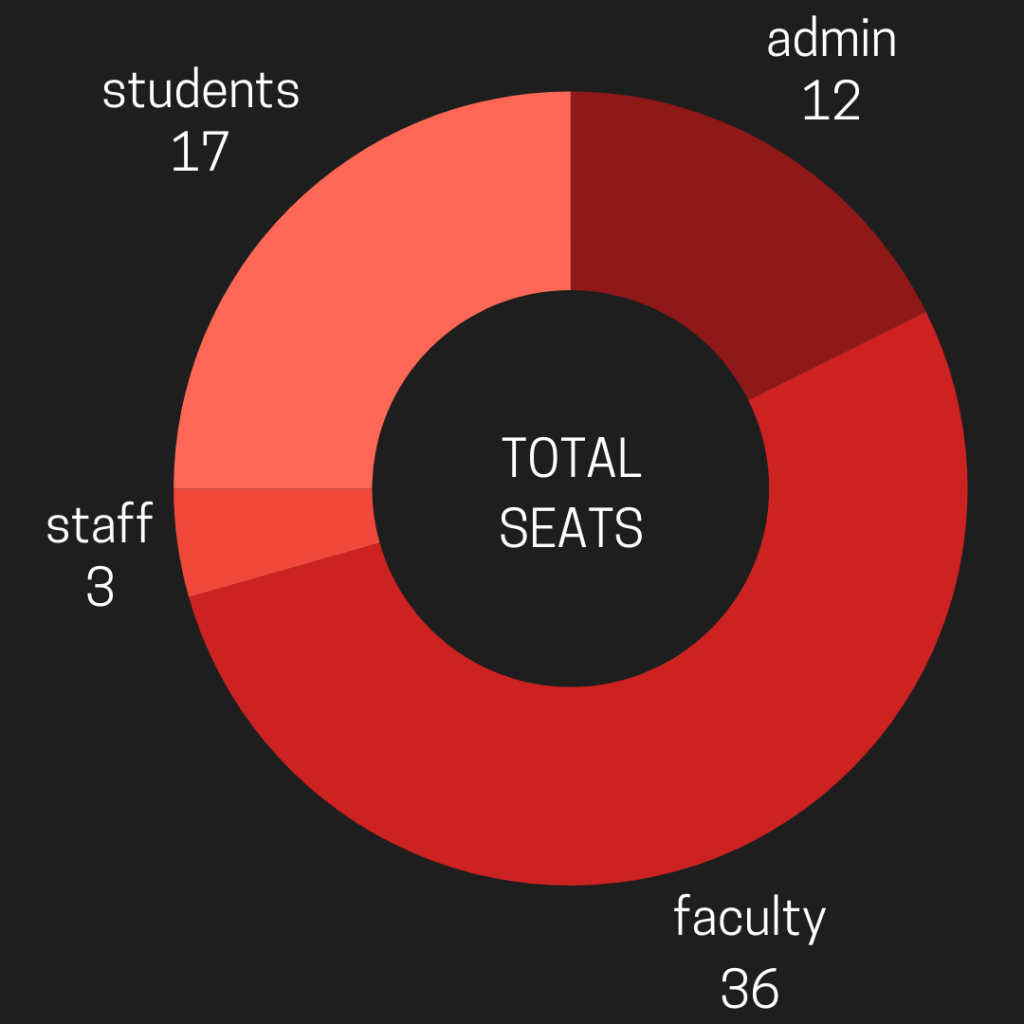
The Central Function of Senate: “Senate determines all matters of an academic character that affect the University as a whole, and is concerned with all matters that affect the general welfare of the University and its constituents. Senate shall serve as a forum for discussion and exchange of ideas among the members of the University community.” (Purpose and Functions of Senate). The Legislative Functions include: approve the establishment or closure of any academic unit, centre or institute, subject to ratification by the Board of Trustees; approve the establishment or closure, on the recommendation of Faculty Boards and Schools, of all programs of study leading to a degree, diploma, or certificate, and review all such programs cyclically.
The Terms of Reference for the Senate Committee on Academic Development and Procedures (SCADP) includes: to make recommendations to the Senate on the establishment of any faculty, school, non-research centres or institutes, departments, or the academic terms of endowed or named chairs/professorships (excluding named research chairs that are primarily funded by external granting agencies), and approve minor changes to the academic terms of reference of such chairs/professorships on behalf of the Senate from time to time; to make recommendations to the Senate on the academic quality and financial implications of proposals from faculties, schools, centres, and institutes, for new programs of study leading to a degree, diploma, or certificate; to make recommendations to the Senate on proposals from faculties, schools, centres, and institutes for changes that substantially alter existing programs of study. https://www.queensu.ca/secretariat/senate-committee-academic-development-and-procedures
Board of Trustees
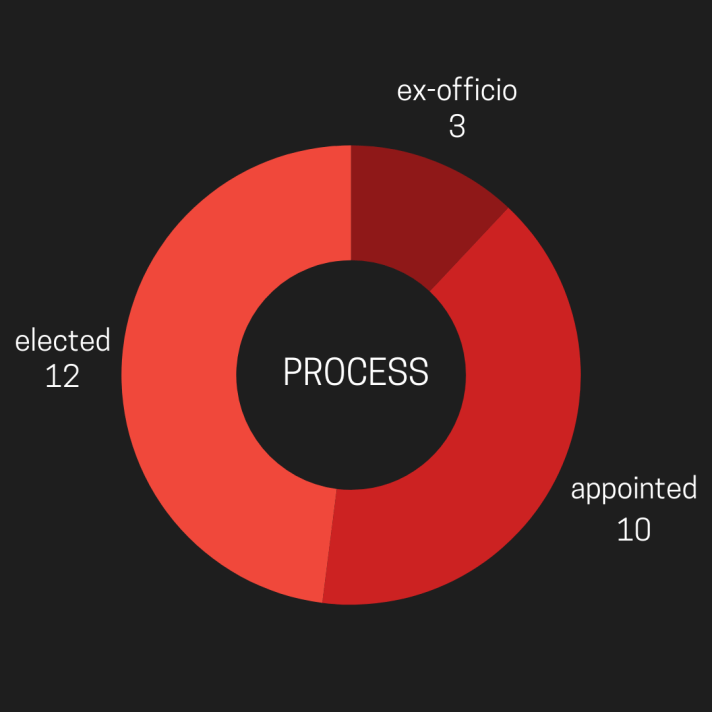
The Board of Trustees is one of three governing bodies of the university, along with the Senate and the University Council, all of which are administered by the University Secretariat. The Board of Trustees is responsible for the overall operations of the University, including: and, in conjunction with the Senate, the appointment of the Principal; overseeing financial matters; property; and the appointment of Vice-Principals.
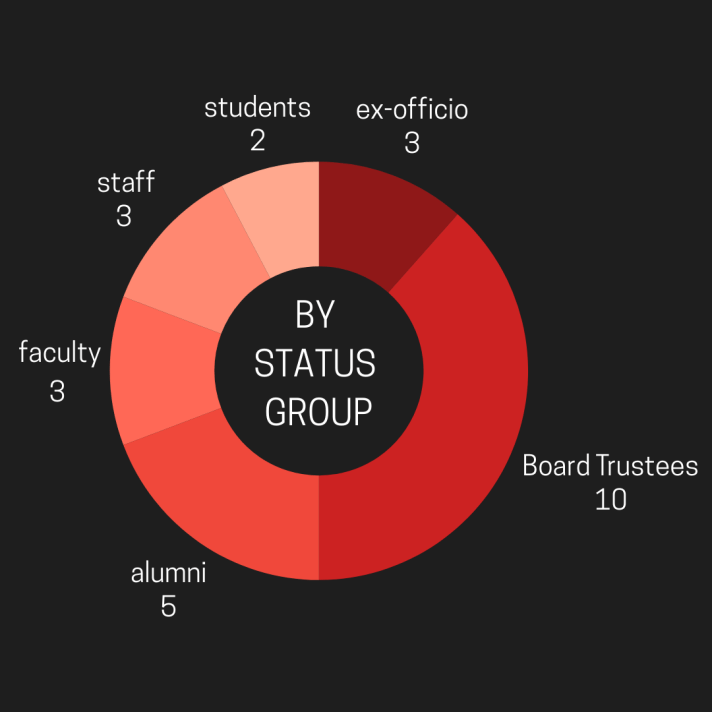
Faculty Boards
As a keystone in collegial governance, all members of the Faculty are able to attend to discuss and vote on academic matters affecting their particular Faculty. Faculty Boards act as bridges between departments and the University Senate, ensuring academic governance, managing program changes, reviewing student failures, and overseeing degree recommendations. Specific Faculties use the Faculty Board to discuss major restructuring and academic initiatives. Typical Functions and Responsibilities include:
Academic Regulation: Controls admissions, sets curriculum standards, and manages academic policies within the Faculty.
Senate Recommendations: Recommends new programs, policies, and candidates for degrees to the Senate.
Student Support: Determines policies on academic supervision and deals with student failures and grade appeals.
Governance: Composed of faculty members, administrative staff, and student representatives, it provides a forum for discussing faculty-wide issues, such as research, and managing student academic affairs.
Policy & Procedures: Oversees regulations concerning faculty members’ professional services, working in conjunction with the dean to ensure adherence to university policies.
Voting Members
Academic Staff
all faculty incl. adjunct faculty
any faculty from other faculties who teach courses
associated librarians
Non-academic Staff
1-3 members as defined in by-laws
Students
undergrad association reps
grad association reps
number defined in by-laws
Administration
Principal, Provost, and others as defined by bylaws
Dean, Vice-Deans, Ass. Deans
More info
FAS
Engineering
Health Science
Business
*no public information on by-laws and meetings available
Education
Law
*no public information on by-laws and meetings available
Campus Unions
aka “The University”
CUPE 229
Trades, Maintenance, Grounds, Custodial and Food Service Workers
CUPE 254
Technical and Lab Support Technicians
CUPE 1302
Library Technicians
USW 2010
General Support Staff
Academic Assistants
Residence Dons

PSAC 901 Unit 1
Graduate Teaching Assistants and Teaching Fellows
Postdoctoral Fellows
QUFA
Faculty, Librarians and Archivists
ONA
Registered Nurses and Nurse Practitioners
OPSEU
Allied Health Care Practitioners
More info
QUFA
CUPE 229
PSAC 901
USW 2010
CUPE 254
CUPE 1302
ONA
OPSEU
The Alphabet Soup
| ASUS | Arts and Science Undergraduate Society |
| AMS | Alma Mater Society |
| CA | Collective Agreement |
| CUPE | Canadian Union of Public Employees |
| DSC | Department Student Council |
| QUFA | Queen’s University Faculty Association |
| ONA | Ontario Nurse Association |
| OPSEU | Ontario Public Service Employees Union |
| PSAC | Public Service Alliance of Canada |
| SGPS | Society of Graduate and Professional Students |
| SGSPA | School of Graduate Studies and Postdoctoral Affairs |
| USW | United Steelworkers |
 Queen's Coalition Against Austerity